
Colubridae
Common Scarletsnake
Cemophora coccinea
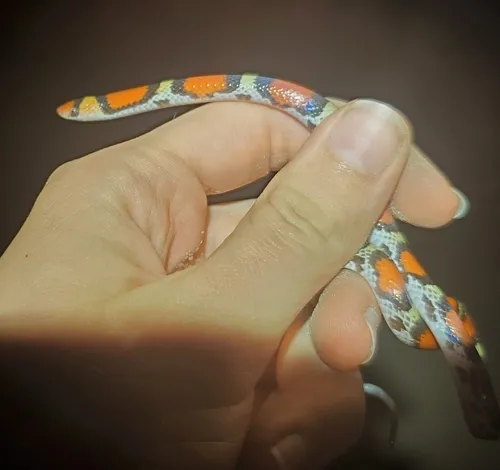
A closer look
Its red, black, and pale blotches do not form the complete rings of a coral snake. It is most often associated with sandy pine woods and typically feeds on reptile eggs and lizards.
- Habitat
- Sandy pine woods
- On the menu
- Reptile eggs & lizards
- Behavior
- A flexible hunter whose activity and escape behavior vary with habitat and temperature.
Not considered venomous to people. Observe without handling, and never corner or relocate a wild snake.
Safety & bite guidance ↗Where it is listed
A sense of place.
Checklist presence only. A highlighted state is not a local range boundary. Territory tiles are schematic.
State & territory checklist
About continuous range data
A verified habitat-model layer is not available for this species in this release. Earlier broad sketches connected jurisdiction locations; they did not show measured occurrence or USGS habitat predictions.
Use USGS distribution resources ↗ for available modeled habitat data.
Names, sources & image evidence
Also known as: Scarletsnake
Taxonomy: provisional. Territory checklist entries may be provisional. Field descriptions include broad group-level natural-history summaries.
Research Grade iNaturalist observation 153133166 has exact taxon Cemophora coccinea
Conservation & local rules
Collection, possession, relocation, and protection rules vary by state and territory. Check the relevant wildlife agency before taking action. Leave wild snakes where they are.