
Viperidae
Pygmy Rattlesnake
Sistrurus miliarius
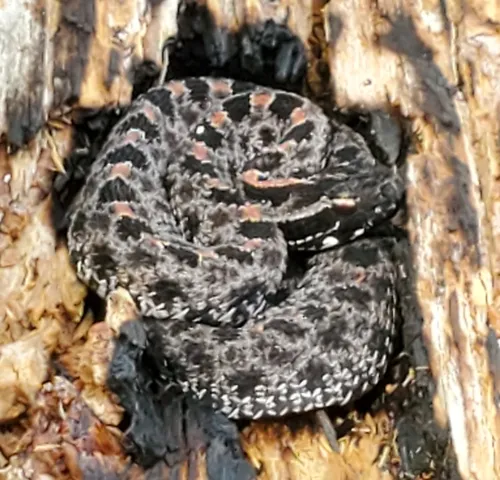
A closer look
Tiny but venomous; its rattle can sound like a faint insect buzz. It is most often associated with pine woods and wetland edges and typically feeds on frogs, lizards and mice.
- Habitat
- Pine woods & wetland edges
- On the menu
- Frogs, lizards & mice
- Behavior
- A sit-and-wait hunter that relies on camouflage, heat-sensing pits, and a rapid strike.
A suspected bite needs emergency medical care. Do not wait for symptoms or use this guide to judge severity.
Safety & bite guidance ↗Where it is listed
A sense of place.
Checklist presence only. A highlighted state is not a local range boundary. Territory tiles are schematic.
State & territory checklist
About continuous range data
A verified habitat-model layer is not available for this species in this release. Earlier broad sketches connected jurisdiction locations; they did not show measured occurrence or USGS habitat predictions.
Use USGS distribution resources ↗ for available modeled habitat data.
Names, sources & image evidence
Also known as: Western Pygmy Rattlesnake
Taxonomy: provisional. Territory checklist entries may be provisional. Field descriptions include broad group-level natural-history summaries.
Research Grade iNaturalist observation 158433332 has exact taxon Sistrurus miliarius
Conservation & local rules
Collection, possession, relocation, and protection rules vary by state and territory. Check the relevant wildlife agency before taking action. Leave wild snakes where they are.