
Natricidae
Common Gartersnake
Thamnophis sirtalis
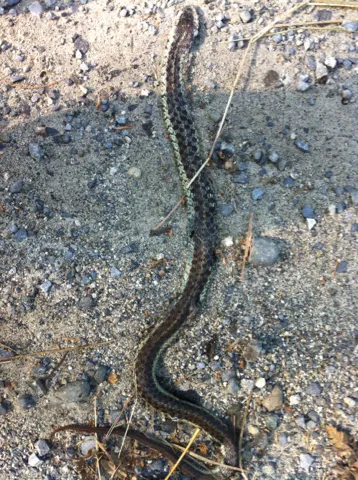
A closer look
Texas, eastern, and New Mexico forms occur in separate parts of the state. It is most often associated with moist grassland and woodland and typically feeds on worms, frogs and fish.
- Habitat
- Moist grassland & woodland
- On the menu
- Worms, frogs & fish
- Behavior
- Usually avoids people and uses cover or water as an escape route when disturbed.
Not considered venomous to people. Observe without handling, and never corner or relocate a wild snake.
Safety & bite guidance ↗Where it is listed
A sense of place.
Checklist presence only. A highlighted state is not a local range boundary. Territory tiles are schematic.
State & territory checklist
About continuous range data
A verified habitat-model layer is not available for this species in this release. Earlier broad sketches connected jurisdiction locations; they did not show measured occurrence or USGS habitat predictions.
Use USGS distribution resources ↗ for available modeled habitat data.
Names, sources & image evidence
Also known as: Common Garter Snake
Taxonomy: provisional. Territory checklist entries may be provisional. Field descriptions include broad group-level natural-history summaries.
Research Grade iNaturalist observation 377331 has exact taxon Thamnophis sirtalis
Conservation & local rules
Collection, possession, relocation, and protection rules vary by state and territory. Check the relevant wildlife agency before taking action. Leave wild snakes where they are.